

Introduction: Feelings vs. Facts
Markets are unpredictable.
But humans having emotions is practically guaranteed.
It’s easy to feel confident when everything’s going up.
And just as easy to panic when prices fall - even if nothing’s fundamentally changed.
In this lesson, we’ll explore:
- The emotional triggers that lead to poor investment decisions
- The most common emotional mistakes
- How to build discipline that keeps you on track, even when your feelings say otherwise.
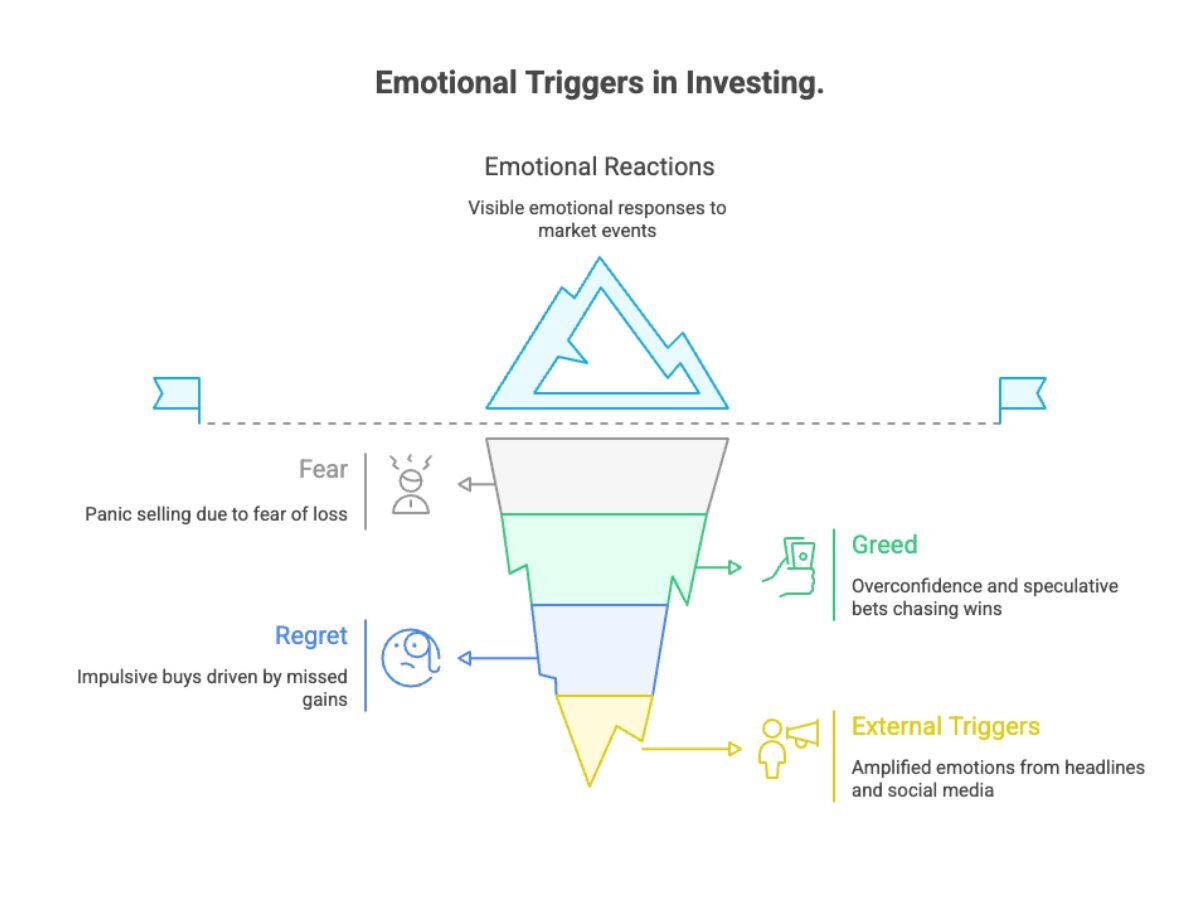
Emotional Triggers in Investing
You might think you’re making rational decisions.
However, emotions are always in the background, pulling the strings.
Below are some of the most common emotional triggers in investing:
Fear
- Fear of losing money leads to panic selling
- Even small market drops can feel catastrophic in the moment
- Fear whispers: “Get out before it gets worse”
Greed
- The flip side of fear: chasing big wins
- Leads to overconfidence, overtrading, and speculative bets
- Greed says: “What if this 10x’s?”
Regret
- Missing out on gains can sting more than actual losses
- Leads to revenge trading or impulsive buys
- Regret says: “I should’ve bought it last week, but maybe it’s not too late”
External Triggers
- Headlines, social media, and market noise amplify emotions
- We react not just to numbers, but to how they’re presented.
Emotional reactions are natural.
But when left unchecked, they lead to costly mistakes.
Common Emotional Mistakes
Even experienced investors fall into emotional traps, especially during market extremes.
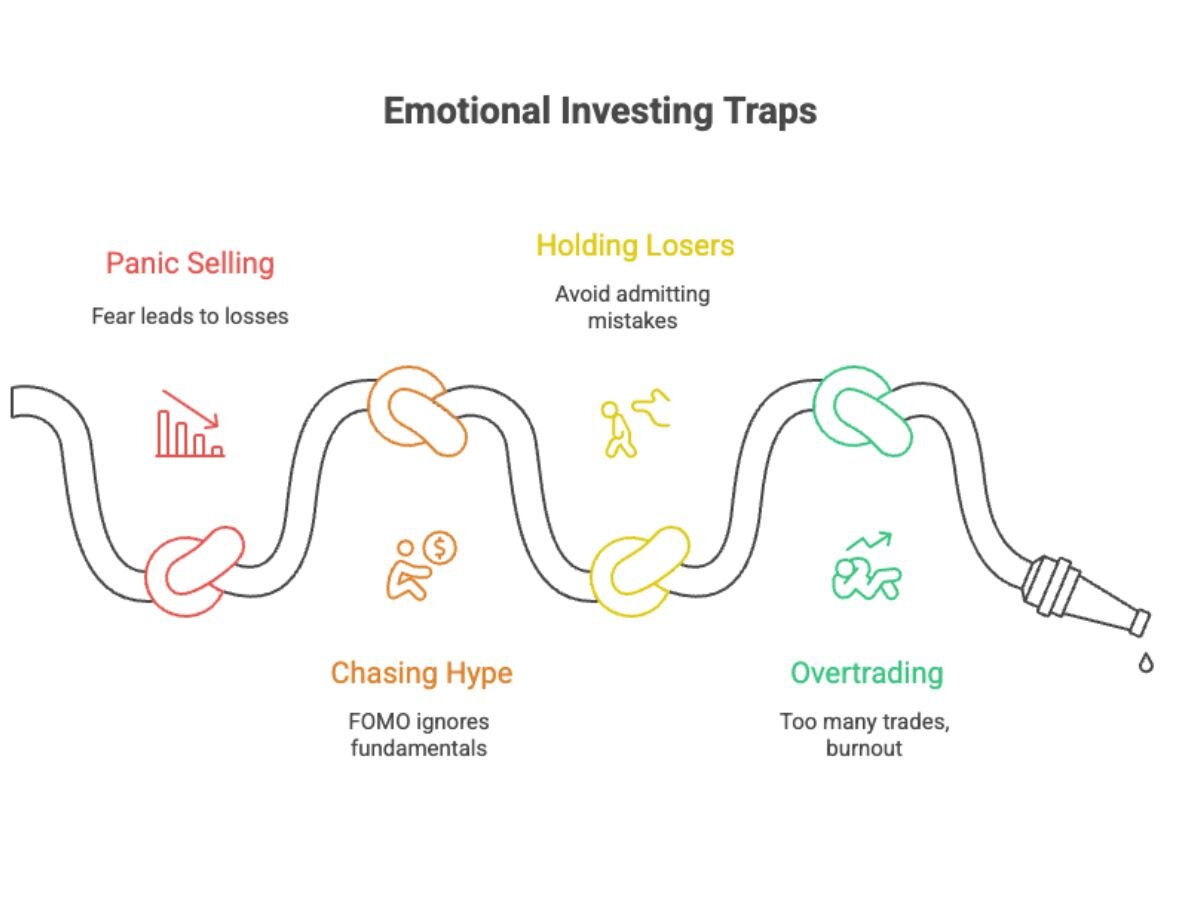
Here are the biggest missteps and how they play out:
Panic Selling:
- Markets dip, fear kicks in, and you sell at the worst time
- Locking in losses turns a temporary drop into a permanent setback
- Often followed by regret when the market rebounds
Chasing Hype
- Buying into hot stocks or trends without research
- Driven by FOMO (Fear of Missing Out), not fundamentals
- Common in bubbles (and crashes often follow)
Holding Losers Too Long
- Refusing to sell a bad investment to avoid admitting a mistake
- “It’ll come back” thinking keeps money tied up in underperformers
- Loss aversion in action
Overtrading
- Making too many trades in response to market noise
- Driven by anxiety, boredom, or the illusion of control
- Leads to higher fees, tax hits, and burnout
These mistakes don’t just cost you financially. They also lead to mental and emotional fatigue that compounds over time.
Real-World Examples
Emotional investing plays out in real headlines and real portfolios.
This is how emotional decisions have impacted investors in major market moments:
The 2008 Financial Crisis
- Many investors sold at the bottom, locking in huge losses
- Those who stayed invested saw full recovery (and more) in the following years
- Lesson: Fear, and not the market itself, can lead to permanent losses.
The Meme Stock Frenzy (2021)
- Stocks like GameStop and AMC surged. Then crashed.
- Many bought in at the peak due to hype and FOMO
- Lesson: Greed and herd behavior can wipe out gains fast
COVID-19 Market Crash (March 2020)
- Market dropped 30%+ in weeks
- Panic selling was widespread
- But markets bounced back within months
- Lesson: Reacting emotionally can cost you the rebound
History is full of people who broke their plans in moments of stress, and paid the price.
Staying Disciplined: What's Actually Effective
You can’t eliminate emotion, but you can build systems that protect you from it.
Here are a few things that can help:
Have a Written Plan
- Define your goals, time horizon, and risk tolerance
- Know what you’ll do when markets drop (not just when they rise)
- Plans reduce panic by giving you a script to follow
Automate Where You Can
- Use auto-investing, recurring contributions, and rebalancing tools
- Reduces the temptation to “wait for the right time”
- Takes emotion out of routine decisions
Use Simple Guardrails
- Checklists before big moves: “Why am I buying/selling?”
- Pre-set stop-losses or rules (e.g., never sell in panic)
- Build habits, not reactions.
Discipline beats timing. You don’t have to worry about making perfect decisions, but you do need to try and make fewer emotional ones.
Quiz
What emotional trigger often leads to panic selling?
aGreed
bFear
cConfidence
What is a common outcome of chasing hype in investing?
aLong-term stability
bMissed opportunities
cBuying high and potentially losing money
3. What’s one effective way to stay disciplined in investing?
aFollow daily financial news
bCheck your portfolio hourly
cAutomate your contributions and follow a plan
See the answers at the bottom
Exercise: Review Your Last Reaction
Think of the last time you:
- Sold an investment suddenly
- Bought something because it was trending
- Delayed investing due to fear
Write down:
- What you did
- What emotion was driving it
- What you could do differently next time
Summary and Key Takeaways
- Emotions like fear, greed, and regret can derail even the smartest investors.
- Common emotional mistakes include panic selling, chasing hype, and overtrading.
- Real-world market events show how emotional decisions often lead to poor timing and losses.
- The best defense is discipline:
- Write down your plan
- Automate decisions
- Stick to your rules (even when - and especially when - emotions flare)
Final thought: You are not required to feel emotionless. All you need is a system that keeps your feelings from running the show.
Answers to the Quiz and Exercise Questions
Quiz Answers:
1) What emotional trigger often leads to panic selling?
Answer: c) Fear
2) What is a common outcome of chasing hype in investing?
Answer: c) Buying high and potentially losing money
3) What’s one effective way to stay disciplined in investing?
Answer: c) Automate your contributions and follow a plan.
Additional resources
This section contains helpful links to related content. It isn’t required, so consider it supplemental.
It looks like this lesson doesn’t have any additional resources yet. Help us expand this section by contributing to our curriculum.