

Introduction: The Power of Precommitment
When things get stressful, we fall back on our habits.
And in investing, your best habit is having a plan before the chaos hits.
Without a plan, emotions take over.
With one, you have a clear path, even when the market is noisy.
In this lesson, you’ll learn:
- What goes into a strong investment plan
- Why it protects you from emotional mistakes
- How to update it as your life and goals evolve
What an Investment Plan Looks Like
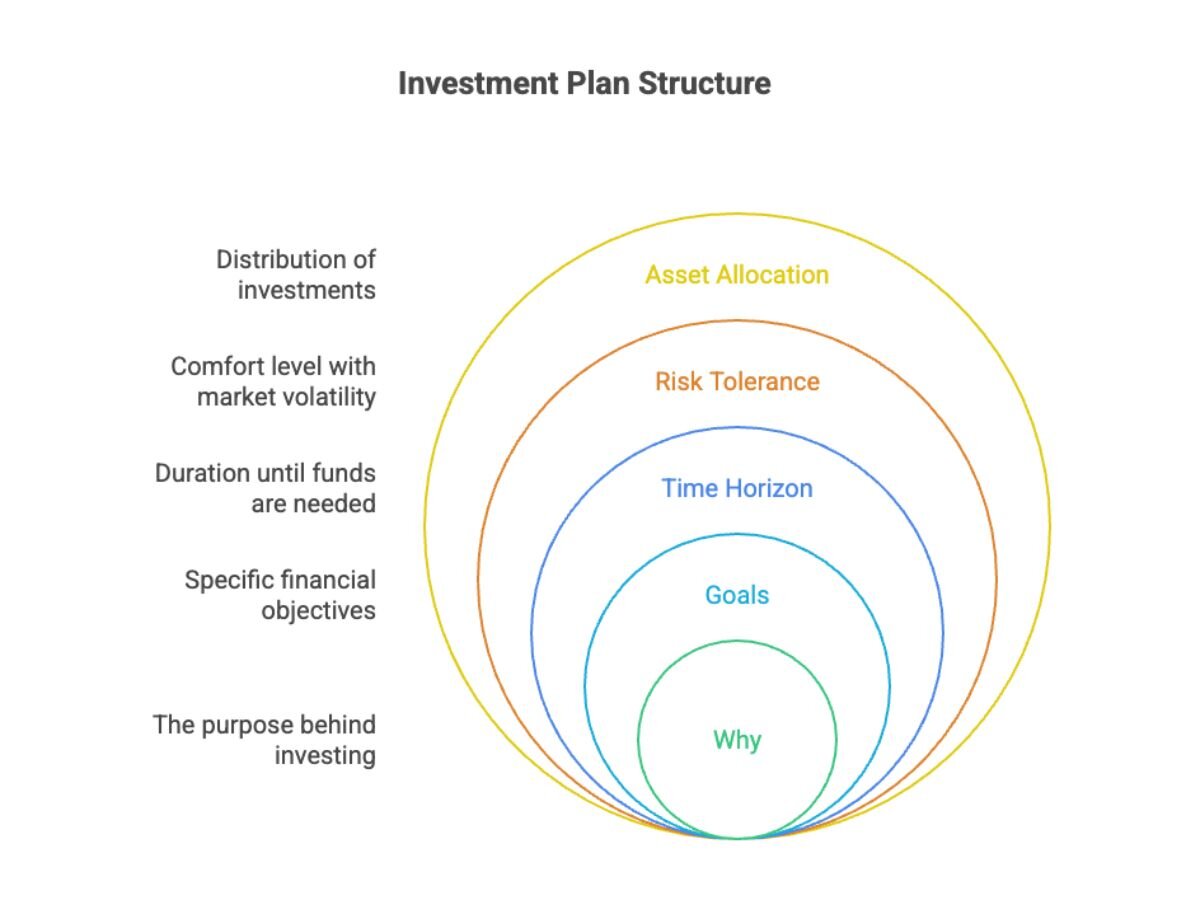
An investment plan is a framework for action.
It tells you what to do, when to do it, and most importantly, why.
Key Components of a Basic Plan:
Your Goals
- What are you investing for? (e.g., retirement, a home, financial freedom)
Time Horizon
- When will you need the money? (Short-, medium-, or long-term)
Risk Tolerance
- How much volatility can you handle emotionally and financially?
Asset Allocation
- How you’ll split money between stocks, bonds, cash, etc.
Rebalancing Rules
- When you’ll adjust your portfolio to stay on track (e.g., annually or when it drifts 5%)
How a Plan Keeps You On Track
Markets will rise. Markets will fall.
Headlines will scream. Friends will give “tips.”
But your plan is what will help you keep calm and focused.
Why It Is Effective:
Removes Emotion
- You’ve already made the hard choices. Now you just follow the map.
Stops Overreaction
- When others panic or chase trends, your plan says: “Stay put.”
Creates Consistency
- Regular contributions, rebalancing, and reviews.
With a plan, investing becomes less about reacting and more about progressing.
Adjusting (Not Abandoning) The Plan
Life changes. Your goals evolve.
That doesn’t mean you throw out the plan. You refine it.
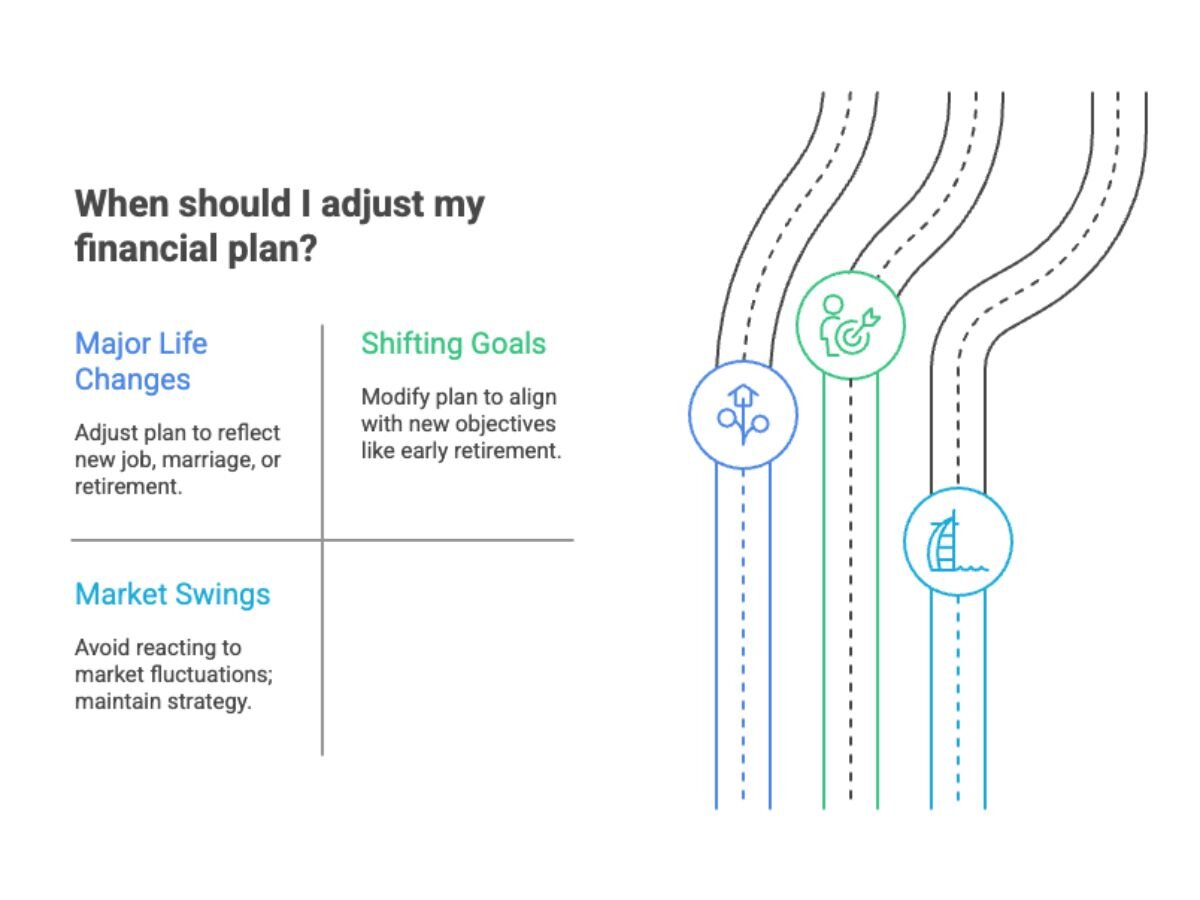
When It’s Time to Adjust:
- You get a new job or income changes
- You hit major milestones: marriage, kids, retirement
- Your goals shift (e.g., retiring early or buying property sooner)
But Don’t React to Market Swings:
- A dip isn’t a reason to scrap your strategy
- A bull run isn’t a reason to go “all in”
- Let your goals (not your emotions) trigger the changes.
Keep the Core While Tweaking the Edges
- Review your plan once a year (or after major life changes)
- Update what is important, but stick to your investing principles.
A strong plan bends when needed, but doesn’t break at the first sign of noise.
Quiz
What’s the main benefit of having a plan?
aIt keeps you from making emotional decisions
bIt helps you predict the market
cIt guarantees higher returns
When should you update your investment plans?
aAfter every market dip
bOnce a week
cAfter major life changes or at scheduled review times
3. What should be part of a basic investment plan?
aDaily stock picks
bYour goals, asset allocations, and risk tolerance
cThe names of your favorite investing influencers
See the answers at the bottom
Exercise: Start Your Own Plan (Simple Version)
Write down:
- Your biggest financial goal (e.g., retirement, a house, etc)
- When you’d like to reach it
- How much risk you’re comfortable taking (low, medium, high)
- How you might divide your money (stocks, bonds, cash)
- When you’ll check in on this plan (e.g., once a year)
This is your personal blueprint.
Summary and Key Takeaways
- A written plan helps you invest with clarity and purpose instead of with emotion.
- It defines your goals, time horizon, risk tolerance, and asset mix.
- Your plan is your anchor during uncertainty and your compass when markets get noisy.
- You don’t need to change it often.
- When life changes, adjust the plan, but don’t abandon it.
Answers to the Quiz and Exercise Questions
Quiz Answers:
1) What’s the main benefit of having a plan?
Answer: a) It keeps you from making emotional decisions
2) When should you update your investment plans?
Answer: c) After major life changes or at scheduled review times
3) What should be part of a basic investment plan?
Answer: b) Your goals, asset allocations, and risk tolerance
Additional resources
This section contains helpful links to related content. It isn’t required, so consider it supplemental.
It looks like this lesson doesn’t have any additional resources yet. Help us expand this section by contributing to our curriculum.