

Introduction: The Real Battleground Is Your Brain
Markets rise and fall. Trends come and go.
But the one constant in investing is human emotion.
No matter how logical we think we are, our brains are hardwired with biases that pull us away from good decisions, especially with money on the line.
In this lesson, you will:
- Learn what behavioral finance is
- Recognize the most common investing biases
- Understand how emotions quietly influence your decisions
What is Behavioral Finance?
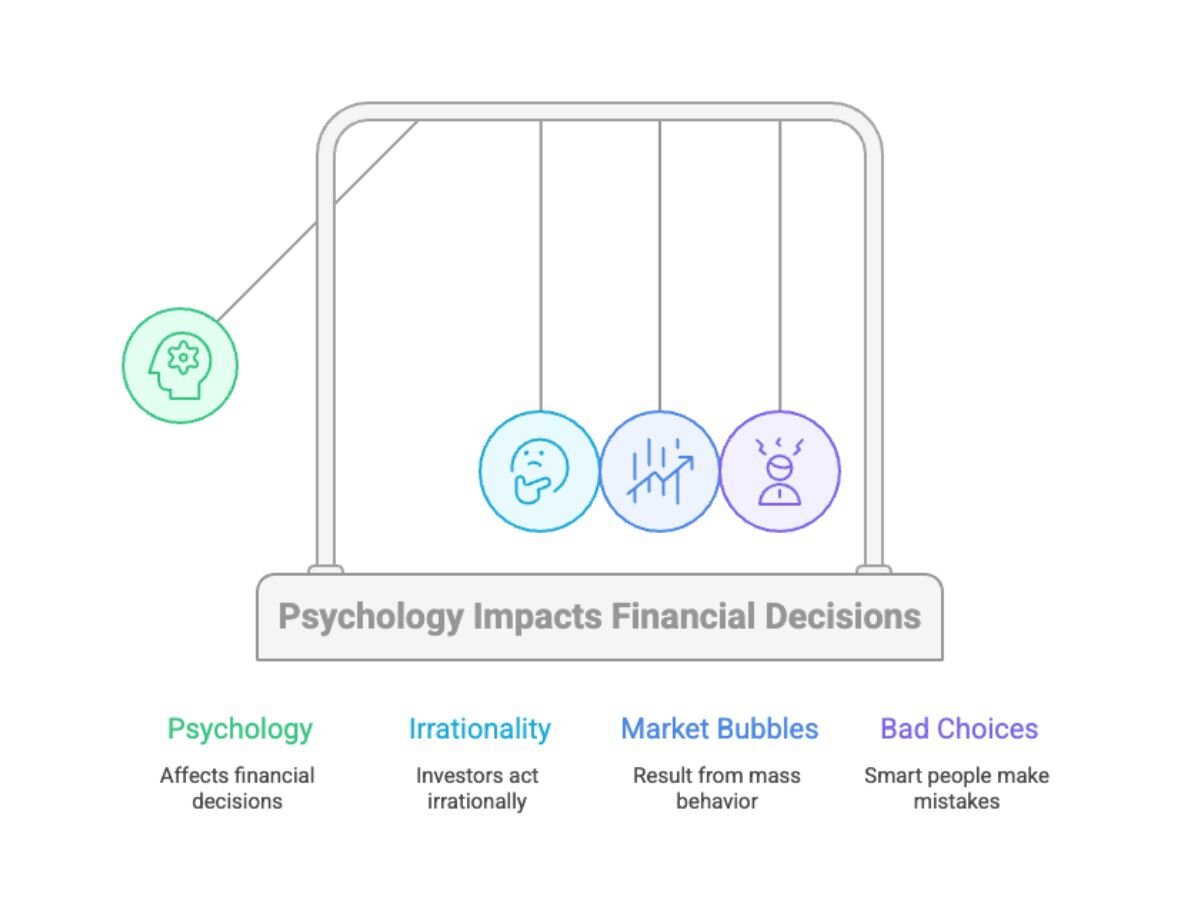
Behavioral finance is the study of how psychology affects financial decisions.
It helps explain why investors often act irrationally, even when they know better.
Why It Is Important:
- Traditional finance assumes we make decisions logically
- But real-world investing is filled with emotion, impulse, and bias
- Behavioral finance bridges the gap between what we should do and what we actually do
Real-World Consequences:
- Investors buy high and sell low because of fear and greed
- Market bubbles and crashes often result from mass behavior, not logic
- Smart people still make bad choices, because they’re human.
Understanding behavioral finance isn’t about avoiding mistakes entirely, but about making fewer and smaller ones over time.
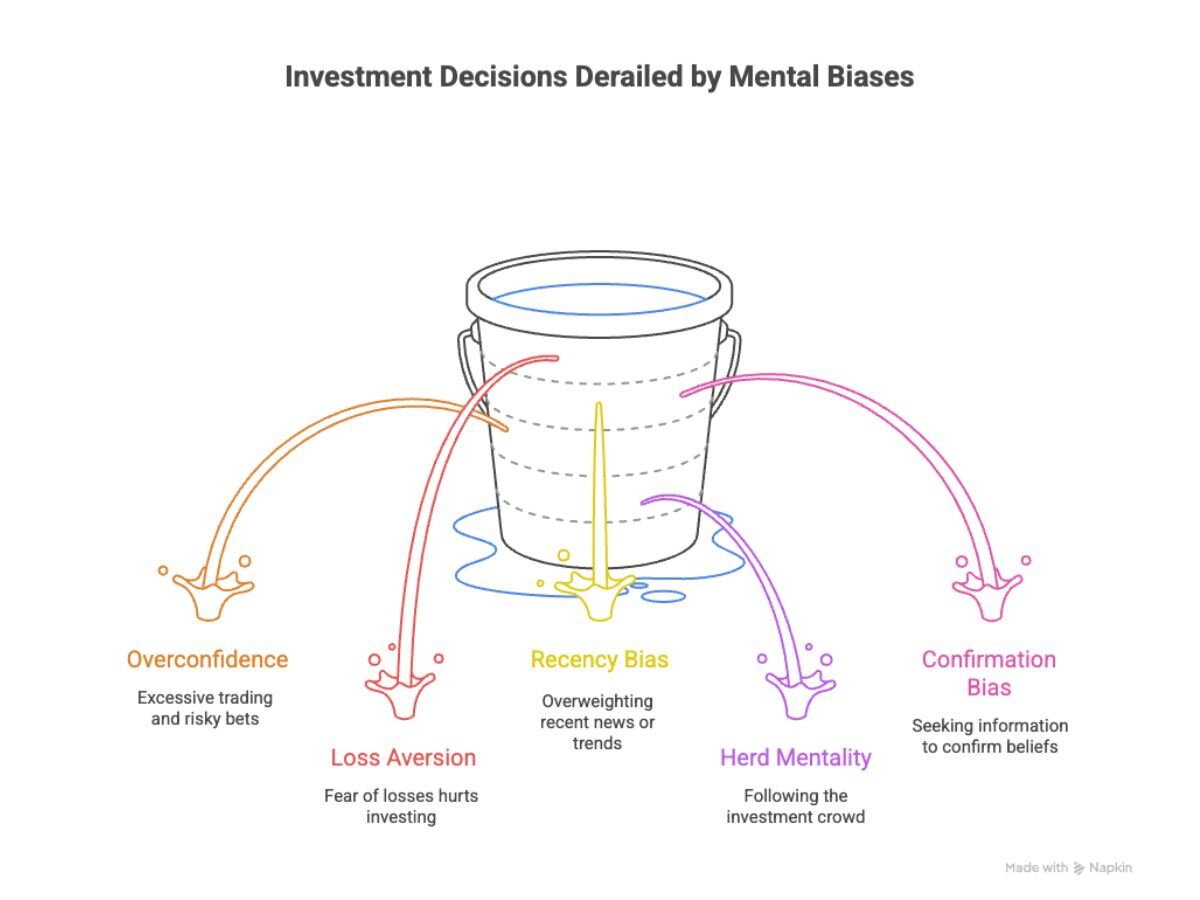
Common Cognitive Biases That Derail Investors
Our brains use mental shortcuts (called heuristics) to make decisions quickly.
But when it comes to investing, those shortcuts often lead us off course.
Here are some of the biggest culprits:
Overconfidence
- Believing you can consistently pick winners or time the market
- Leads to excessive trading and risky bets
- Common in bull markets when “everything seems easy”
Loss Aversion
- Losses hurt more than gains feel good
- Investors hold onto losing stocks too long, or avoid investing altogether.
- “I’d rather not lose $100 than gain $150”
Recency Bias
- Overweighting recent news or trends
- Thinking what happened recently will keep happening
- Example: Selling after a dip, assuming it will get worse
Herd Mentality
- Following what others are doing, especially during bubbles or panics.
- “Everyone’s buying it, so I should too”
- Leads to FOMO-driven decisions
Confirmation Bias
- Seeking only information that supports what you already believe
- Ignoring red flags or alternative perspectives
- Dangerous when evaluating stocks or investment strategies
These biases affect all investors, from beginners to pro. Recognizing them is the first step to managing them.
Why These Biases Are So Hard To See
The toughest thing about cognitive biases is that they don’t feel like mistakes.
They feel like logic.
This is why:
Our Brains Are Wired for Survival, Not Investing
- We evolved to avoid danger, not manage portfolios
- Fear and instinct once kept us alive. But now, they push us to sell low and panic early
- Short-term thinking was a survival tool; now it’s a financial liability
Biases Feel Comfortable
- Overconfidence feels like confidence
- Loss aversion feels like “being smart with money”
- Recency bias feels like “being realistic”
You won’t stop having biases. But you can slow down, check yourself, and build systems that help you act smarter than your instincts.
Quiz
What is loss aversion?
aThe tendency to sell winning stocks too early
bThe fear of missing out on gains
cThe tendency to fear losses more than we enjoy gains
What's an example of herd mentality?
aSelling a stock because it hit your stop-loss
bBuying a hot stock just because everyone else is
cAvoiding investments during a recession
3. Which bias leads you to ignore information that contradicts your beliefs?
aConfirmation bias
bRecency bias
cOverconfidence
See the answers at the bottom
Exercise: Spot the Bias
Think about a financial decision you’ve made recently:
- Did you hold onto something too long?
- Did you follow the crowd without doing research?
- Did you ignore news that didn’t support your viewpoint?
Write down:
- What decision you made
- What influenced it
- Which bias (if any) was at play
Summary and Key Takeaways
- Behavioral finance explains why even smart investors make emotional decisions.
- Biases like overconfidence, loss aversion, and herd mentality often lead to poor outcomes.
- These mental shortcuts are hard to notice, because they feel logical.
- The key isn’t to eliminate bias, but to recognize and manage it with awareness and structure.
Answers to the Quiz and Exercise Questions
Quiz Answers:
1) What is loss aversion?
Answer: c) The tendency to fear losses more than we enjoy gains
2) What's an example of herd mentality?
Answer: b) Buying a hot stock just because everyone else is
3) Which bias leads you to ignore information that contradicts your beliefs?
Answer: a) Confirmation bias
Additional resources
This section contains helpful links to related content. It isn’t required, so consider it supplemental.
It looks like this lesson doesn’t have any additional resources yet. Help us expand this section by contributing to our curriculum.