
Arrive AI Inc. - Current Ratio
ARAI
Price:
$0.2498
Market Cap:
$11.92M
Arrive AI Inc. operates a subscription-based "Mailbox-as-a-Service" platform. This innovative system facilitates the automated, on-demand, and secure delivery of various goods, including packages, products, and food. It boasts intelligent, climate-controlled features and can receive items from a diverse range of delivery methods, such as traditional couriers, drones, and robotic systems. Established in 2020, the company is based in Fishers, Indiana. It was previously recognized as Arrive Technology Inc. before officially changing its name to Arrive AI Inc. in September 2024.
Industry
Software - Application
IPO Date
2025-05-15
Stock Exchange
NASDAQ
Ticker
ARAI
PE Ratio
[-0.78]
ROE
[-730.42%]
Current Ratio
[0.92]
Dividend Yield
[0%]
Enterprise Value
[14.38M]
Dividend History
The Current Ratio as of September 2026 (TTM) for Arrive AI Inc. (ARAI) is 0.92
According to Arrive AI Inc.’s latest financial reports and current stock price. The company's current Current Ratio is 0.92. This represents a change of -5.85% compared to the average of 0.97 of the last 4 quarters.
Arrive AI Inc. (ARAI) Historical Current Ratio (quarterly & annually)
How has ARAI Current Ratio performed in the past?
The mean historical Current Ratio of Arrive AI Inc. over the last ten years is 13.31. The current 0.92 Current Ratio has changed 588.42% with respect to the historical average. Over the past ten years (40 quarters), ARAI's Current Ratio was at its highest in in the March 2025 quarter at 3.80. The Current Ratio was at its lowest in in the September 2022 quarter at 0.
Average
13.31
Median
0.34
Minimum
0.31
Maximum
54.38
Arrive AI Inc. (ARAI) Current Ratio by Quarter and Year
Discovering the peaks and valleys of Arrive AI Inc. Current Ratio, unveiling quarterly and yearly fluctuations to gain insights into the company’s financial performance and market dynamics, offering valuable data for investors and analysts alike.
Maximum Annual Increase = 9.08%
Maximum Annual Current Ratio = 54.38
Minimum Annual Increase = -97.23%
Minimum Annual Current Ratio = 0.31
| Year | Current Ratio | Change |
|---|---|---|
| 2025 | 0.34 | 9.08% |
| 2024 | 0.31 | 1.46% |
| 2023 | 0.31 | -97.23% |
| 2022 | 11.21 | -79.39% |
Arrive AI Inc. (ARAI) Average Current Ratio
How has ARAI Current Ratio performed in the past?
The current Current Ratio of Arrive AI Inc. (ARAI) is greater than its 3-year, less than than its 5-year, and less than than its 10-year historical averages
3-year avg
0.32
5-year avg
13.31
10-year avg
13.31
Arrive AI Inc. (ARAI) Current Ratio vs. Peers
How is ARAI’s Current Ratio compared to its peers?
Arrive AI Inc.’s Current Ratio is greater than Stem, Inc. (0.83), greater than Sangoma Technologies Corporation (0.90), less than Airship AI Holdings, Inc. (3.18), less than Expensify, Inc. (3.50), greater than Zepp Health Corporation (0.90), less than ZenaTech, Inc. (2.64), less than TROOPS, Inc. (0.92), greater than X3 Holdings Co., Ltd. (0.74), less than TTEC Holdings, Inc. (1.87), less than Arbe Robotics Ltd. (2.30),
| Company | Current Ratio | Market cap |
|---|---|---|
| 0.83 | $42.28M | |
| 0.90 | $116.26M | |
| 3.18 | $67.33M | |
| 3.50 | $225.67M | |
| 0.90 | $63.02M | |
| 2.64 | $92.76M | |
| 0.92 | $261.42M | |
| 0.74 | $575.47K | |
| 1.87 | $58.88M | |
| 2.30 | $82.18M |
Build a custom stock screener for Arrive AI Inc. (ARAI) and other stocks
One of the best ways to find valuable stocks to invest in is to build a custom made screener in your Excel or Google Sheets spreadsheet. This allows you to compare thousands of companies like Arrive AI Inc. using the financials and key metrics that matter to you in a single view.
The easiest way to set this up is to use the Wisesheets add-on and set your spreadsheet like this:
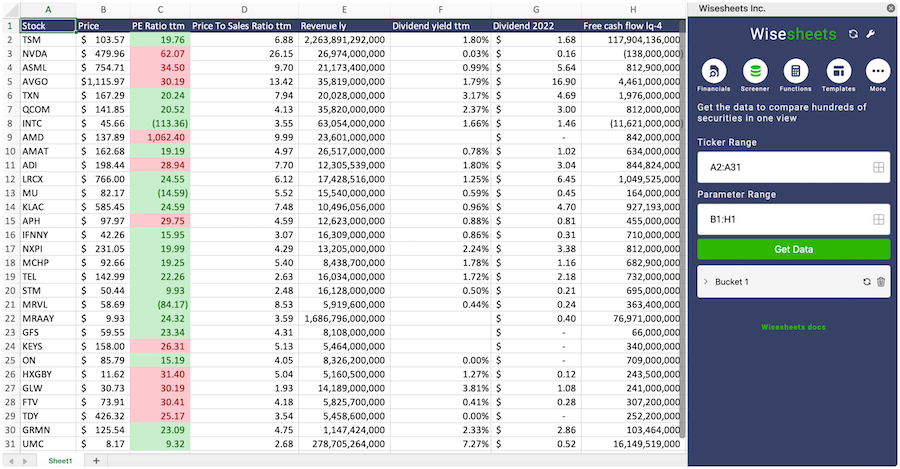
Covering all these metrics from financial, data, dividend data, key metrics and more you can get all the data you want for over 50+ exchanges worldwide.
Get your free trial here.
Arrive AI Inc. (ARAI) and other stocks custom spreadsheet templates
The easiest way to analyze a company like Arrive AI Inc. or any others is to create a spreadsheet model that automatically retrieves all of the stock data you need.
Using Wisesheets you can set up a spreadsheet model like this with simple spreadsheet formulas. If you change the ticker you can get all of the data automatically updated for you.
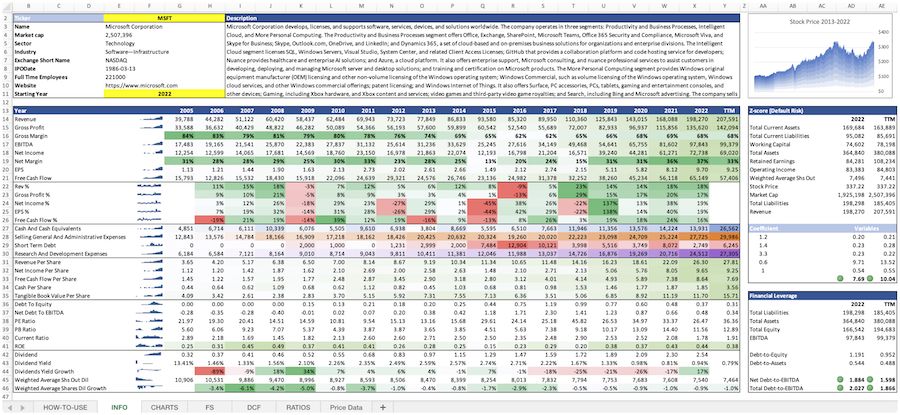
Whether you need live data, historical price data, financials, dividend data, key metrics, analyst estimates, or anything else...Wisesheets has you covered.
Frequently asked questions❓
What is the Current Ratio?
How can you use the Current Ratio?
What is Arrive AI Inc.'s Current Ratio?
How is the Current Ratio calculated for Arrive AI Inc. (ARAI)?
What is the highest Current Ratio for Arrive AI Inc. (ARAI)?
What is the 3-year average Current Ratio for Arrive AI Inc. (ARAI)?
What is the 5-year average Current Ratio for Arrive AI Inc. (ARAI)?
How does the current Current Ratio for Arrive AI Inc. (ARAI) compare to its historical average?